Now for Something a bit different...
The adventures of energy consultants in far flung places.


Established subscribers and followers of this page will know that my long-time business partner Steve Whitehouse (SpaceTimeEnd) and I occasionally publish joint articles.
Before we were both silenced on LinkedIn for questioning “the narrative” we also sometimes published articles on there, including the light-hearted piece reproduced below relating to our time in Tbilisi, Republic of Georgia, some 25 years or so ago.
This hopefully amusing story, albeit with a serious underlying message, is 90% Steve’s work, so I take no credit other than for a bit of proof-reading and the odd small contribution to content.
The “serious underlying message” is that - given top level backing, the right attitude, and a small team of very good people - anything is possible. This is worth remembering given the existential challenges currently faced by the UK.
Steve wrote the article in the first person and it was published under his LinkedIn account. It is reproduced in full, as it was originally published.
We both hope you enjoy it and that it raises the odd smile.
The Reality of Projects: A Different Perspective
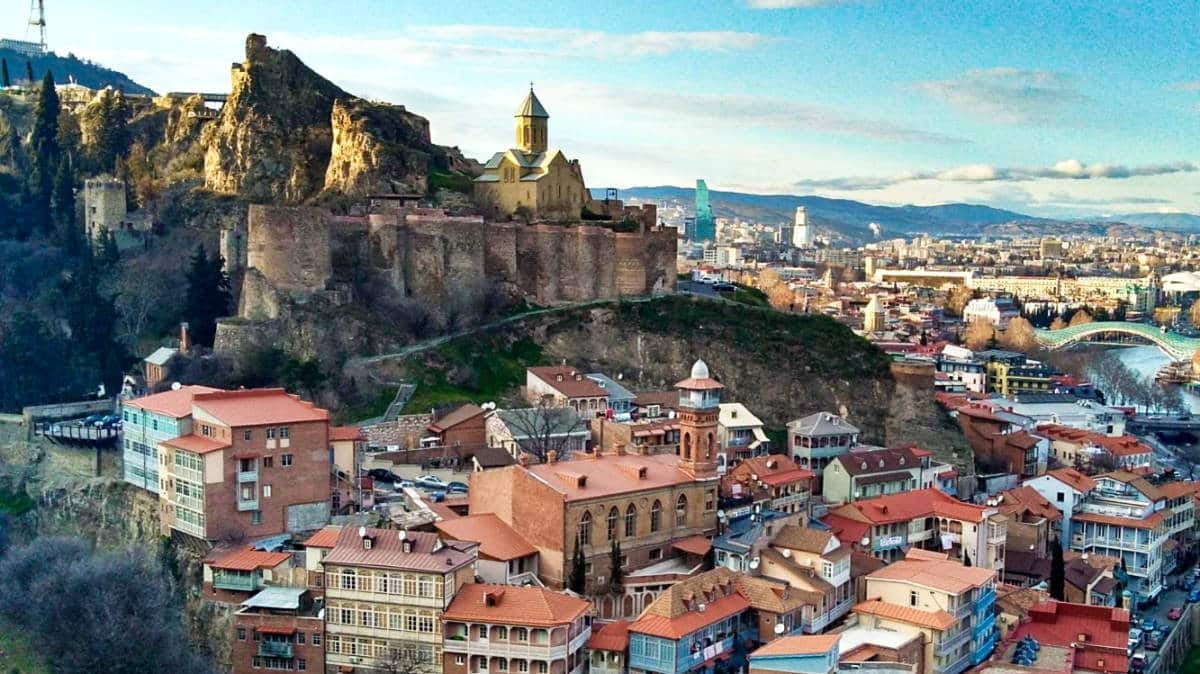
In previous publications with my colleague and business partner John Sullivan, we presented a professional, but perhaps rather formal, series of three articles on how to successfully deliver business change and IT projects.
We thought it might be useful to share our experience of a challenging project that we were involved in a few years back, where the use of formal procedures was very helpful in a uniquely informal environment.
Background
One of our customers said they had a power company client who wanted to improve revenues, including the implementation of a new customer billing system, for the capital city of an ex-Soviet country – Tbilisi, Republic of Georgia. Could we help? I immediately responded in the affirmative.
A meeting was set for the next day where I would present to our prospective client an overview of all the key aspects of billing systems. There was a slight problem; I knew next to nothing about Billing. My colleague who knew a great deal was skiing in Italy.
There was only one solution, he would have to phone me from a freezing telephone box in Italy (mobile roaming wasn’t so easy at the turn of the millennium) and I would write everything down - from which I would prepare a presentation. What could go wrong?
The meeting with our prospective client was very informal and I gave a high level presentation which amazingly went well, any bits I wasn’t sure about, which was quite a lot, I just talked louder. We got the job there and then - Georgia here we come.
Now Georgia is a lovely country with a rich history and wonderful people, warmly welcoming and rightly proud of their heritage. But it’s fair to say that they were slightly on the back foot at the time. Having recently been through the break up of the Soviet Union and the Georgian civil war, there were one or two issues. The recent president Eduard Shevardnadze (who had previously served as minister of foreign affairs for the USSR) had been introducing wide-ranging reforms, including the privatisation of the power sector, but things were not yet quite back to their best.
At that time, daily life in Georgia had its own unique perils. Some of the taxis had bullet holes in the windows and they invariably smelled of petrol. We found out later that the local petrol was usually enhanced, and only worked well in Russian cars. The consequent regular dry cleaning bills for our suits nearly bankrupted us.
The traffic lights in the middle of Tbilisi, were invariably not working, so journeys across town involved a game of chicken between the taxi drivers. On frequently icy roads and bald-tyred Trabants, any sign of other vehicles approaching at right angles meant they always speeded up. Much to our amazement and relief, we survived the daily ‘adventure’ and over time we became awed admirers of the driving skills of the imperturbable – and indestructible – Tbilisi cabbies.
The first day at work was very interesting. We presented at the client company headquarters, looking smart in our best suits and carrying our posh briefcases, but smelling faintly of petrol fumes from the cab.
Our boss took us to our reserved ‘office’, where our assigned local contact proudly explained that everything was ready for us. Entrance was easy; there was no door on the room, and as we walked in we noticed that there was no plaster on the walls, no furniture, and ventilation was via a broken window! There was also about an inch of dust on the floor and the windows that weren’t broken we could not see through. My ski-loving colleague was starting to look a bit concerned for some reason.
Our boss, who became our lifelong friend, told us to get on with it and we did not see him for the next three days! This was the time when we developed our life long motto, which has always held us in great stead, of, “Get Amongst Them”.
After a day wandering around the headquarters building trying, inter alia, to find the IT department, we found one particular gentleman who spoke perfect English and was incredibly clever. In fact most Georgians we met were clever and very well educated; we found a couple of the staff sweeping the floor who had PhD’s in physics, these were hard times for the Georgian people after the Soviet breakup and civil war.
Our new found friend told us that the IT department we were searching for didn’t exist. So who looked after the billing system? “What billing system” came the response. My colleague gave me a worried sideways glance!
But we were then led to the office of the old company boss, which miraculously had clean, intact windows and doors, and contained furniture which wouldn’t have looked out of place in an Italian fashion magazine. It contained three young people using standalone desktop computers, who turned out to be very bright and incredibly willing to learn. To cut a long story short we eventually rounded up six people who metamorphosed into the project and software development team.
So, to start the Project
However, getting going was a bit problematical. As most of the residents of Tbilisi had never previously paid for electricity, they found this new concept strange, and clearly did not expect any customer service in return. And, as we had now discovered, there were no IT systems just shabby, out of date, paper customer records in the basement of the building. The random sample we were shown had not been updated in many years. My colleague was starting to look seriously pale by now, I think his sense of humour was being stretched.
However, we soldiered on. The usual stuff - following Prince II and SSADM, we agreed and documented the scope, organisation chart and associated roles and responsibilities.
One of the work streams was to develop and set up an IT department, a significant project in itself, one of the Georgians took to it like a duck to water and it became very successful through his ability and enlightened leadership, and the department went from strength to strength.
However there was one significant difficulty of a personal nature. The loos were terrible, certainly beyond the use of us softy Brits. This meant that breakfast was out of the question, a cup of tea would have to suffice. However this changed after a few months when our boss managed the installation of an international standard ablutions system, he was awarded the Medal of the Karsi and his esteem rose to giddying heights; this was probably the high point of the project.
Another distraction was when our hotel, who were charging $100 a night, a great deal of money in Tbilisi at that time, decided to run their printing press overnight which was situated directly under my bedroom. They failed to see my problem and it took several days to sort out. My colleague seemed to brighten up a bit now, his room overlooked some nice parkland and he apparently was sleeping very soundly.
Another problem was the arbitrary nature of the Russian mind, for no obvious reasons they would cut off the gas to Georgia, resulting in us having to shave in cold water in the dark. This took a while to get used to!
UK Training
So we’d now formally established a project, set up a fledgling IT department, documented the scope, and an outline design (high level data model and functional overview).
A key decision that we made at this time was that the solution approach would be to build a bespoke system from scratch, rather than to try to shoe-horn in a customised-off-the-shelf (COTS) package. Brave - I think this was my colleague getting his own back on me!
Now we needed to step back a little and empower the new Georgian IT team to run with things under our loose tutelage. So our Georgian friends came to the UK where we developed bespoke training courses for them covering all the salient points of Prince II and SSADM: I taught project management, testing, quality assurance, RAID logs and so on. My colleague; business case, business requirements, solutions architecture (Data and Applications). It was a lot to take in, and was initially bewildering but came to life when it was used to define THEIR billing system in the full necessary detail. This is when the project began to really gel.
Data
Back in Tbilisi a wide ranging data project was initiated to clean up and computerise the old paper customer records and acquire new customer and geographic data, along with the development of a sophisticated data model for the database design. The latter was required to cope with the very complicated customer charging regimes where, for example, subsidies were applied for past military service and estimated bills were based on a complex set of factors, including ‘supply regime’ – the number of hours per day that power was supplied to each customer, from 24 hours down to just 2 in some cases!
Oh and did I forget to mention; this was all going on in parallel with a very ambitious programme to physically replace nearly 400,000 meters for every supply point in Tbilisi!
A diversion: General Business Operations
After about eight months of extreme effort by the work force in the process of turning the company around, the MD – much loved by the work force and even the Georgian people, and who was often seen on local TV – decided to take his senior management team to a ski resort (Gudauri) in the Caucasus mountains for a weekend of team bonding. He may have been a wonderfully motivating boss, but he wanted his pound of flesh from his external consultants so my colleague and I were assigned the job of facilitating the team-building sessions.
The early part of the first evening, after the skiing, was set aside for team building exercises. One of us (yours truly) had been responsible for developing the challenges all day while the other had been off skiing with the client management team; my colleague’s countenance was now improving apace; revenge apparently felt sweet!
A few days in a beautiful ski resort, accompanied by excellent food and a couple of recuperative beers, had the anticipated result on team morale. The team building went very well and had the intended rejuvenative effects.
Results: Completing the Billing Project
Operations were initiated and slowly the project came to life. We were very proud of the success of the project, which reads as follows on our résumés:
“In Republic of Georgia, delivered bespoke Customer Billing system from scratch and converted 400,000 paper records in 18 months - increasing cash collection from 10% to 75% in two years”.
In fact all we did was to steer the ship in the right direction in the early days and paid close attention to the QA procedures throughout the project. The Georgian team were the real heroes and their achievements surprised and delighted us.
Summary
While our first few days in Tbilisi may have slightly challenged our usual self-confident assurance, the Tbilisi Billing Project was a great opportunity and experience for us, working with delightful, very intelligent people and getting paid for it. How much better do projects get? We made friends for life and are still in contact with some of people, occasionally meeting up in London.
I am pleased to say that all the initial project team ended up with senior jobs, one the senior director of an international company. Our boss became a firm friend and the much admired MD moved onto to other international challenges.
Georgia is a beautiful country full of historical sites, which straddles high mountains and extends to the Black Sea, and Tbilisi is a wonderful capital city to explore. The people are friendly and generous, and Georgia is certainly worth a visit if you get the opportunity.
I could fill many more pages providing anecdotes beyond the business side of things. The famous Georgian wines. The lavish celebratory meals, called Supras, during which foreign guests are mandated to drink copiously and make long rambling speeches full of toasts to all and sundry. How trying to learn a few Georgian words and phrases made the most complicated vowel-less Welsh challenges look like a walk in the park (my would-be linguist colleague spent about a week ‘perfecting’ the pronunciation of the word for coach/trainer). How, whenever we were offered a lift from our hotel to any of the excellent and atmospheric Tbilisi restaurants, we always opted for the car of the previous MD which, having political plates, meant we could avoid the police stopping us to request donations to the ‘police benevolent fund’ and thus that we would arrive on time for dinner. How I was nearly arrested at the airport for trying to smuggle ‘antique’ artworks out of the country (fortunately the paint was still slightly wet on the traditional painting I’d commissioned from a local artist). And many more.
Now, working in Kiev during the Orange Revolution, with Russian Special Forces parked up in tanks at the end of the main thoroughfare, well that’s another story…
 | A guest post by
|